

Dialogues of the Baltic Nobility in the Early Modern Period
Nobility and Dialogue
Literary and Historical Background
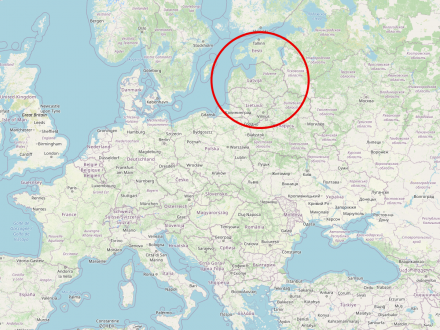
The Baltic States is a region in the north-east of Europe and is composed of the three states Estonia, Latvia and Lithuania. The Baltic States are inhabited by almost 6 million people.
Noble Dialogue in the Age of Enlightenment

Livonia (Livonija in Latvian, Liivimaa in Estonian) is a historical landscape in the Baltic States. It comprises the southern part of present-day Estonia and the part of present-day Latvia north of the Daugava River. The landscape was named after the Livonians, a population group that hardly exists today.
Historically, the name Livonia can refer to other, different contexts. The governorate of the same name, which was one of the three Baltic Sea governorates of the Russian Empire, is particularly influential for today's understanding of the historical region. It existed from the beginning of the 18th century until 1918 and its capital was Riga, located at the mouth of the Duna.
Livonia had previously given its name to other states and confederations, most notably the Livonian Confederation, which had existed since the High Middle Ages. The Livonian part of the Teutonic Order as well as regional ecclesiastical states belonged to the confederation. The confederation also included large parts of the present-day states of Latvia and Estonia. After the dissolution of the confederation and the Teutonic Order state in the 16th century, sovereignty changed several times. Without the southern and northern areas, Livonia initially came under Polish-Lithuanian rule, later also under Swedish suzerainty, before coming under Russian rule in the course of the Great Northern War (1700-1721). Until the beginning of the 20th century, the central role of the landowning German-speaking nobility was particularly influential in the internal social organization of the rural area.
Let him remember, my friend, that servants do not join in the conversation when persons of rank are present. Let him go to his room. Who asked for his opinion?4


Early Modern Writing: An Overview

A Funeral Sermon
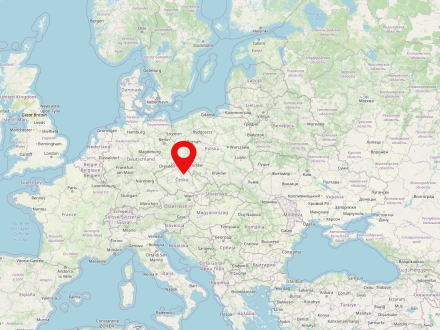
The Czech Republic is a country in Central Europe with a population of about 10.5 million people. The capital and largest city of the country is Prague. In the Czech Republic lie the historical landscapes of Bohemia, Moravia and parts of Silesia. In 1918 the state of Czechoslovakia was formed, but the Czech Republic was not founded until 1993. The country has been a member of the EU since 01.05.2004.

Pärnu (population in 2025: 40,934) is an Estonian county seat in the eastern part of the country. The port city was founded in 1241 by the Livonian Order. It was a member of the Hanseatic League. From 1560 to 1617, Pärnu belonged to Poland, with brief interruptions due to Swedish and Russian occupation. Legal recognition of the Swedish incorporation did not occur until 1660. In 1721, Pärnu was conquered by Russia. The Declaration of Independence of the Republic of Estonia was proclaimed in the city on February 23, 1918; the country regained its sovereignty after periods of Soviet (1939–41, 1944–1991) and German (1941–1944) occupation. Pärnu has been a major Baltic Sea resort since the 19th century.
The Count was, above all, of a peaceable, cheerful, and friendly disposition. He lived in love and harmony with people of every standing, high and low alike; he joked courteously when the occasion arose, enjoyed conversation, and spoke even with the humblest citizens, servants, and peasants.7
A Defense Treatise
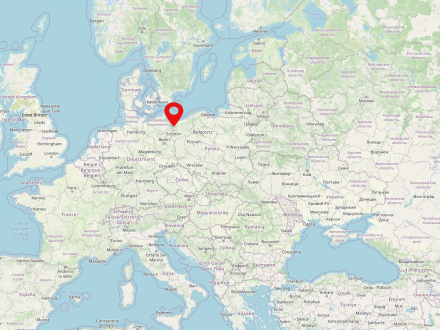
Pomerania is a region in northeastern Germany (Vorpommern) and northwestern Poland (Hinterpommern/Pomorze Tylne). The name is derived from the West Slavic 'by the sea' - 'po more/morze'. After the Thirty Years' War (Peace of Westphalia in 1648), Western Pomerania initially became Swedish, and Western Pomerania fell to Brandenburg, which was able to acquire further parts of Western Pomerania in 1720. It was not until 1815 that the entire region belonged to the Kingdom of Prussia as the Province of Pomerania. The province existed until the end of World War II, its capital was Szczecin (today Polish: Stettin).
[…] nor will anyone, whoever he may be, truthfully be able to accuse me of ever having despised those of lower rank in the way proud and arrogant men do, or of having placed myself above those of equal standing [...].8
[…] I therefore conclude that this is a false and groundless accusation, maliciously invented by arrogant and envious people and slanderers, as though nothing but sheer ambition and pride had prompted me to write this defense; whereas I in fact regard myself as considerably lower than my rank and station might warrant, and just as I willingly grant and show every person the respect due to them, and am fully inclined to do so, I also expect the same from them in return—and in this I offend neither God nor man.9
Info section
Authors
