Shevchenko and the Ukrainian National Myth

,
DOI:
Why would anyone shoot at a 19th-century poet in the 21st century? In Ukraine, Taras Shevchenko is far more than a figure from literary history. This article explores how his life, language and poetry became a living national myth.
It is hard to imagine anyone in Ukraine not recognizing Taras Shevchenko. His image is everywhere: his portraits hang in every school, his self-portrait appears on the current 100-hryvnia banknote, and in almost every town or village there is a street named after him or a monument erected in his honor. This author is unmistakable – through his writing style, his manner of expression and, above all, the thematic focus of his work: what it means to be Ukrainian.
Shevchenko is regarded as a classic of Ukrainian literature who, even under the most difficult historical circumstances, has always played a formative role in the cultural understanding of Ukraine’s national identity – under the pressure of the Tsarist Empire, during the repressions of Soviet Ukraine, through to Russia’s ongoing military aggression today. Time and again, he reminds Ukrainians ‘who they are’ and points to ways in which cultural and national survival can remain possible.

Shevchenko’s Reception Beyond Ukraine

And yet, despite the fact that Shevchenko’s work was so firmly focused on all things Ukrainian, there were moments when his voice was heard beyond the Ukrainian lands. Although the Russian Empire did everything in its power to suppress the spread of Ukrainian voices, Shevchenko nevertheless succeeded in making his central vision for the Ukrainian people resonate within European intellectual circles. Against the backdrop of increasing repression of the Ukrainian language and culture, such a breakthrough was far from inevitable. The  Valuev Circular
Valuev Circular
A decree issued by the Russian Interior Minister Pyotr Aleksandrovich Valuev (1815–1890) in July 1863, which prohibited the publication of religious and educational books in Ukrainian throughout the Russian Empire. In particular, publications that could be used to learn Ukrainian were henceforth banned. The publication of belles-lettres remained permitted. The decree was a response to the growing Ukrainian national movement and also came amid significant political tensions elsewhere in the Empire – including the January Uprising (1863–64), which had broken out shortly beforehand, particularly in Congress Poland, in opposition to Russian rule there. The decree accordingly justified the ban as necessary to counter separatist movements. It even denied the existence of a distinct, “so-called Ukrainian language” (“так называемый, украинский язык”), claiming that it was merely a dialect of Russian (one that many local people allegedly found more difficult to understand and that had been influenced by Polish), or a contemporary political invention of regional groups, particularly Polish ones.
 of 1863 and the  Ems Ukaz
Ems Ukaz
also:
Ems Ukase
A decree issued by Tsar Alexander II (1818–1881) in 1876 that prohibited the import, printing and public recitation of almost all publications in Ukrainian throughout the Russian Empire. Works that were still permitted to be reproduced (for example, historical source texts) had to be printed in Russian orthography and were subject to strict censorship. Other provisions of the decree concerned schools and the press.The decree takes its name from the spa town of Bad Ems, where Alexander II was staying at the time. It remained in force until the so-called October Manifesto of 1905 issued by Tsar Nicholas II (1868–1918) effectively brought it to an end.
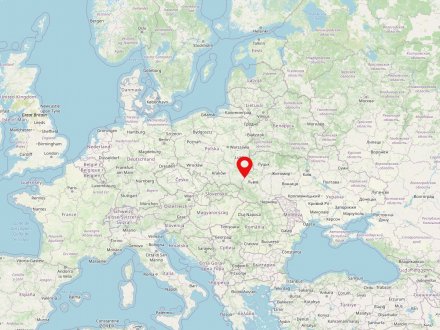
 of 1876, in particular, created a cultural climate that was, to put it mildly, deeply hostile to the development of Ukrainian culture. Nevertheless, Shevchenko’s works were also published outside the Russian Empire – for example in 
Galicia
deu. Galizien, yid. גאַליציע‎, yid. Galitsiye, ron. Halici, ron. Galiția, hun. Halics, hun. Gácsország, hun. Kaliz, hun. Galícia, ces. Halič, slk. Halič, rus. Галиция, rus. Galizija, ukr. Галичина, ukr. Halytschyna, pol. Galicja

Galicia is a historical landscape, which today is almost entirely located on the territory of Poland and Ukraine. The part in southeastern Poland is usually referred to as Western Galicia, and the part in western Ukraine as Eastern Galicia. Before 1772, Galicia belonged for centuries to the Polish-Lithuanian noble republic, and subsequently and until 1918 - as part of the crown land "Kingdom of Galicia and Lodomeria" - to the Habsburg Empire.
, in western Ukraine, which at the time belonged to the Habsburg monarchy, as well as in other parts of Europe. In 1876, a two-volume edition of his Kobzar was published in 
Praha
deu. Prag, eng. Prague, lat. Praga, yid. פראג

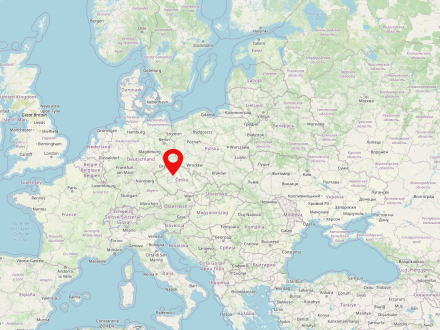
Prague (population 2025: 1,407,084) is the capital and largest city of the Czech Republic. It is located in the center of the urban area on the Vltava River. The first Prague Castle was probably built in the 9th century. In the 10th/11th century, immigrant Jews lived alongside the local population in what were initially two neighboring castle settlements. At the beginning of the 1230s, Prague was granted city rights, followed by Malá Strana in 1257, Hradčany as a castle town in 1320 and the New Town of Prague (Nové Město) in 1348. From the very beginning, Prague was the residence of the Bohemian rulers, at the latest from the 12th century within the borders of the Holy Roman Empire. As the seat of the emperor in the 14th century, Prague developed into one of the most important centers of the entire empire, and the first university in Central Europe was founded here in 1348. In 1784, the four cities were formally united. Gradually, especially in 1920 and after the founding of Czechoslovakia in 1918, further towns were incorporated. Between 1938 and 1945, Prague became the capital of the Protectorate of Bohemia and Moravia, which was dependent on the German Reich. After the Allies broke up the Reich in 1945, Prague was once again the capital of - now socialist - Czechoslovakia until 1992. After the collapse of Czechoslovakia, Prague remained the capital of the Czech Republic and one of the most culturally, economically and politically important cities in Central Europe.

, prompting a considerable number of responses.
Following the publication of this edition of Kobzar, the French scholar Émile Durand went on to publish an extensive article on the Ukrainian poet in the prestigious journal Revue des deux mondes (1876). Among other things, he described how Ukrainian peasants would undertake a kind of pilgrimage to Shevchenko’s grave near 
Kaniw
ukr. Канів, deu. Kaniv, pol. Kaniów

Kaniv (population in 2024: 23,849) is a city in the Cherkasy Oblast in central Ukraine. Thanks to its location at a crossing on the Dnieper River, Kaniv was already an important trading center of the Rus’ along the trade routes to the south as early as the 11th century. From 1240, the city served as an administrative seat of the Golden Horde, which controlled Rus’. In 1362, Lithuania conquered the city. Following the Union of Lublin in 1569, the Polish Crown assumed jurisdiction over Kaniv, which was granted Magdeburg city rights in 1600. The city, located on the outskirts of the Polish-Lithuanian Commonwealth, was attacked several times by the Ottoman Empire and briefly conquered. In 1793, Kaniv was incorporated into Russia as part of the Second Partition of the Polish-Lithuanian Commonwealth. The Ukrainian national poet Taras Shevchenko was buried in the city in 1861. Over the course of the 19th century, Kaniw’s Jewish population grew significantly. A pogrom took place here in 1917. In early 1919, the city was briefly under the control of the Ukrainian People’s Republic, though its troops were quickly defeated there.

 – something Durand saw as a sign of their profound respect for a poet of the people. His article prompted two further pieces: one by John Austin Stevens in the New York journal The Galaxy (1876), and another by Charles Dickens Jr. in the London magazine All the Year Round (1877). A Ukrainian influencer with a following in the millions, known not merely by name but read with genuine affection – this is how the poet’s influence is summed up in the latter publication. His name appears there as a cultural phenomenon without parallel in the Slavic world. It is noteworthy that the author opens his account by asking how Ukrainian culture developed and how it survived for centuries in its struggle between political powers such as Poland, Russia and the Ottoman Empire. Shortly afterwards, the Madrid journal La Ilustración Española y Americana (1877) published an article by Volodymyr Lesevytsch entitled “Taras Shevchenko, el gran poeta de Ucrania”, along with several translations of his poems. In the German-speaking world, one of the first journalists to introduce Shevchenko systematically to a wider readership was Karl Emil Franzos. Also in 1877, he published the article “Die Kleinrussen und ihr Sänger” in the Augsburger Allgemeine Zeitung, in which he described Shevchenko as the central voice of the “Little Russians”, that is, the Ukrainians.1
Later, scholars and writers from a range of ideological perspectives assessed Shevchenko’s significance for the struggle for Ukrainian freedom in the 20th century. In 1940, for example, the German communist writer Alfred Kurella devoted an analytical essay to the poet entitled “Taras Schewtschenko: Der Nationaldichter der Ukraine” in the journal Internationale Literatur, in which he described Shevchenko as a “poet of the people’s freedom”. In 1982, George Grabowicz published the book The Poet as Mythmaker: A Study of Symbolic Meaning in Taras Ševčenko, which presents Shevchenko not only as a national poet, but as a symbolic figure who evolved into a myth-maker of Ukrainian identity. He emphasizes that Shevchenko’s texts acquired an archetypal significance and became a “symbolic battleground” for understanding what it means to be Ukrainian.
The selection of assessments of Shevchenko presented here naturally makes no claim to completeness. Yet it shows that, over the centuries – from his own lifetime to the present day – he has been perceived in different parts of the world as a creator and voice of Ukrainian culture and identity, even at times when the Ukrainian people had no political autonomy of their own and were under constant pressure from political regimes.

Shevchenko in the Current War

Today, Shevchenko’s continued relevance in the context of the defensive war against Russia’s aggressive invasion has once again become a source of inspiration – both in popular culture and in new scholarly studies and editions of his work. Shevchenko now appears not merely as a portrait hanging on a school wall, but as a living idea: quotations from his works serve as slogans at checkpoints, as protective words on clothing and helmets, and as words of encouragement inscribed on murals and posters in Ukrainian cities. His image and artistic representations of him are likewise being used actively and extensively – for example, he is depicted in military uniform, as a participant in current events, or on the stage, where he appears as a modern-day hero defending his people. Many see in this a certain kind of “symbolic mysticism”. A telling example was found beneath a poster in the liberated city of Balakliia, which had previously been occupied: when Ukrainian soldiers removed a Russian propaganda poster after retaking the city, lines from the Ukrainian poet’s poem “The Caucasus” were revealed underneath. Apparently, they had been put there before the occupation:
“So fight on, and you shall prevail;
God stands beside you in the righteous fight!”
Since the beginning of the war, Shevchenko has thus become a kind of interlocutor for Ukrainians today – someone they listen to because he does not speak in abstract terms, but understands the concrete pain and suffering of an entire nation fighting for its survival.
That the Russians are hiding Shevchenko’s words beneath their own propaganda posters in the occupied territories is not the worst of it. They are shooting at Shevchenko – not just metaphorically, but literally. In the village of 
Martinìvka
deu. Martyniwka, pol. Martyniwka, pol. Martynówka, rus. Мартыновка, rus. Martynovka, ukr. Мартинівка, eng. Martynivka

Martinìvka (population in 2011: 185) is a village in the Priluki District of the Chernihiv Oblast in northern Ukraine. It was founded in the 17th century on the left bank of the Oster River and was a Cossack village on the border of the Polish-Lithuanian Commonwealth. In 1654, the area was incorporated into the Russian Empire.

 (Chernihiv region), occupying forces fired a shot into the back of the head of a Shevchenko monument in 2022 – as though it were a prisoner sentenced to death. In the 
Charkiwska oblast
eng. Kharkiv, deu. Charkiw, ukr. Harkìvsʹka oblastʹ, ukr. Charkivščina, rus. Charʹkovskaja oblastʹ, rus. Harʹkovskaâ oblastʹ, rus. Kharkovskaya oblast, rus. Харьковская область

The Kharkiv Oblast (population in 2021: 2,598,961, area: 31,418 km²) is an administrative unit in eastern Ukraine. Its capital is Kharkiv. It was founded during the Soviet era as a result of administrative reforms in Ukraine on February 27, 1932. Its territory was reduced several times in the 1930s, mainly due to the establishment of other oblasts. Since 2014, there were attempts by Russia to separate the oblast from Ukraine, but these failed. Since Russia's attack on its neighbor in 2022, parts of the north and east of the oblast have been occupied by Russia.

 region, a portrait of the poet hanging on a school wall was riddled with bullets, while in 
Borodânka
pol. Borodzianka, ukr. Бородянка, rus. Borodânka, rus. Бородянка

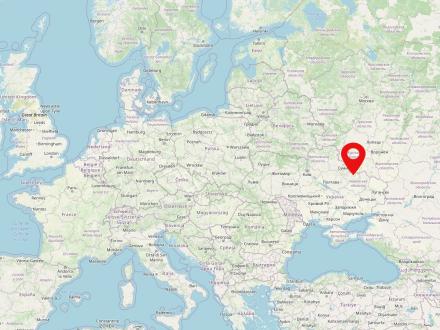
Borodyanka (population 2021: 12,832) is located in the Ukrainian oblast of Kyiv. The settlement, which has been known since the 11th century, was only granted the status of an urban-type settlement in 1954. The multi-storey buildings in the village were largely destroyed in night-time bombardments in 2022 during the early phase of the Russian invasion of Ukraine.
, a bullet struck the bust directly in the face – the bullet hole in the head felt like a final verdict. Are these merely isolated acts of wartime vandalism? No – they are deliberate attacks on a cultural symbol embodying Ukrainian freedom. Significantly, people in 
Charkiv
rus. Charʹkov, rus. Харьков, rus. Charkow, ukr. Харків, rus. Kharkov, ukr. Kharkiv, ukr. Charkiw, rus. Harʹkov, ukr. Harkìv, ukr. Harʹkìv, ukr. Харьків

Kharkiv (population 2024: about 1,300,000) is the second largest city in Ukraine. It is situated in the East part of the country. The city was founded in 1630 or 1653 in the "Wild Field", as the steppe landscape in what is now southern and eastern Ukraine was called at the time. With the shift of the Russian border to the south, it lost its importance as a fortress, but subsequently became a center of trade and crafts. From 1918 to 1934 Kharkiv was the capital of the Ukrainian Soviet Republic.
Since February 2022 Kharkiv has suffered heavy shelling in the Russian-Ukrainian war.

 protected Shevchenko’s statue with sandbags – as though he were not a figure carved in stone, but a human being whose rescue had to come first. For whoever shoots at him is shooting at Ukrainian freedom and identity. Shevchenko – this is precisely what Russians fear: the idea of a free Ukraine.
Reading Shevchenko in this way raises a crucial question: How did it come about that his voice, rather than any number of others, became so deeply rooted in the national memory? Why, of all people, did he come to embody the idea of “true Ukrainianness”? And what is it about his words – beyond the recurring story of suffering in Ukraine’s struggle for freedom – that repeatedly leads people to see in him not merely a poet, but something greater? In what follows, I will attempt to answer these questions, beginning with the concept commonly referred to as a national myth. Above all, however, my starting point will be Shevchenko himself.
In late March 2022, city workers and volunteers built a barrier out of sandbags to protect the Shevchenko monument in Kharkiv from shelling. 

The Philosophy of Shevchenko’s National Myth

Shevchenko conveys a profound experience of national survival – an experience that, over time, has evolved into a myth, taking shape both in his work and in the drama of his life. This is not an invented legend that can be rationally disproved or deconstructed. It is a lived reality that has entered the collective memory. That is why it cannot simply be denied – instead, attempts are made to literally erase Shevchenko: by shooting at his monuments or erasing his words from public discourse. Yet it is precisely these attempts at erasure that reveal how completely Shevchenko has become the embodiment of this myth of survival: his language, his life and the hope for freedom associated with him form a living unity that transcends political borders and time.
His famous address to Ukrainians, which appears as the title of one of his poems – “To the Dead, the Living, and the Yet Unborn, My Countrymen in Ukraine and Beyond Ukraine” – sounds not like a literary construct, but like a spiritual formula of continuity: all generations of Ukrainians – past, present and future – are called upon to stand together, whoever and wherever they may be. Here we see the myth as continuity: a national continuum unfolding beyond administrative borders. 
Alongside this temporal dimension, Shevchenko also articulates a substantive one. In implicit opposition to the colonial logic of his time, he invokes the idea of a political nation that does not divide, but unites:


Embrace one another, my brothers, even the smallest among you –
then the mother, the weeping mother, will smile.
And bless the children with strengthening hands
and kiss them, the little ones, with liberating lips.
And the shameful times of the past will be forgotten,
the glory of Ukraine will spread once more.

From the poem “To the Dead, the Living, and the Yet Unborn...”, 1845. English translation based on the German translation by Vitalii Mudrakov, 2025.
What matters is not social status, but the shared freedom of a future that has yet to be fought for. Shevchenko’s poetry is an uprising in the name of equality – the profoundly modern idea of a brotherhood in which “the mother” – Ukraine – weeps for all her sons. This places his poetry closer to a revolutionary ethic than to folkloric sentimentality. His appeal – “…rise up, cast off your chains, drench your freedom once again in the blood of the evil enemy!” – has a sharpness and force that rival the slogans of the French Revolution: “Liberty, Equality, Fraternity!” This is not literary declamation, but a call to action, deeply rooted in the experience of a people who must rise up in order not to disappear.
What is crucial is that the shared future to which Shevchenko calls his readers is no longer a “Little Russian” one. His vision leaves no room for colonial subordination or a secondary identity. On the contrary, he consistently portrays Ukraine as an independent historical and political community, capable of thinking and acting autonomously. His criticism of the Empire goes beyond moral condemnation – it is grounded in the idea of a community with its own language and collective memory, and with the right to historical agency. Shevchenko’s poetry is therefore not merely an emotional or ethical response to oppression – it is a projection of a future in which the Ukrainian nation exists as a fully-fledged political actor.
The Shevchenko myth consists not only of his texts, but also of his personal fate – the two are inseparably intertwined, and it is precisely here that his archetypal power lies. The myth was not deliberately created or artificially constructed, but is rooted in Shevchenko’s personal experiences: his political persecution, exile, resistance and passionate language. This is why his poetry is so immediately experienced as the voice of all Ukrainians. Everything that happened to him became part of a larger formula for national existence. Together, these elements form a three-dimensional myth, encompassing three aspects of the experience of liberation: sacrifice as the existential price, resistance as the possibility of being oneself, and language as the means of avoiding disappearance.

Willingness to Sacrifice: Shevchenko as a Symbol of Suffering
Shevchenko’s biography is not merely the life story of an artist, but the archetype of a martyr – an embodiment of national suffering. Serfdom, exile to 
Orenburg
rus. Оренбург, deu. Orenburg, kaz. Orynbor, kaz. Орынбор, kaz. Čkalov, kaz. Čkalov, kaz. Чкалов, rus. Чкалов

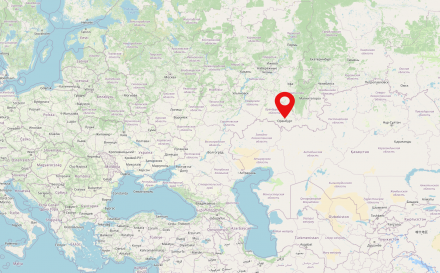
The city of Orenburg (population in 2024: 536,515) is located 1,230 km southeast of Moscow and is the capital of the oblast of the same name. It was founded in 1743 as a Russian outpost on the southern edge of the Ural Mountains. From 1920 to 1925, it was part of the Kyrgyz-Kazakh Autonomous Soviet Socialist Republic, a predecessor state of modern-day Kazakhstan.

 and the 
Fort-Ševčenko
deu. Fort Schewtschenko, rus. Форт-Шевченко, kaz. Форт-Шевченко, rus. Fort-Ševčenko, rus. Fort-Urickij, rus. Форт-Урицкий, rus. Fort-Aleksandrovskij, rus. Форт-Александровский, rus. Novo-Petrovskoe, rus. Ново-Петровское, eng. Fort-Shevchenko, deu. Fort-Ševčenko

Fort-Shevchenko (population in 2025: 8,634) is a city in the Mangystau Oblast in western Kazakhstan. The town, located on the coast of the Caspian Sea, was founded here in 1846 as the Novo-Petrovskoe Fortress. It was granted city status in 1899. In 1939, the city was renamed in honor of the Ukrainian national poet Taras Shevchenko, who was imprisoned in the fortress from 1850 to 1857.

 Fortress, the Tsarist ban on writing, physical illness, isolation – none of this could break his inner resolve. Shevchenko does not merely endure suffering; he consciously refuses to show remorse before the power that punishes him:
“O my thoughts! O gloomy fame!
For you I waste away far from home,
tormented, I suffer – with neither regret nor shame.”2
This way of enduring suffering is not an expression of self-pity – it is the ultimate form of steadfastness in the name of dignity, which would later become part of the collective image of the Ukrainian as a fighter.

Resistance: Poetry as a Way of Being Oneself

Shevchenko’s poetry is not an aesthetic escape, but a way of existing in resistance. His work is not a weapon of anger, but an act of dignity that shapes people as political subjects. At a time when Ukrainian was being erased, remaining silent meant capitulation, while speaking and writing in Ukrainian was already a form of resistance. One of his best-known appeals, quoted earlier, sounds like a kind of spiritual call to action:
“So fight on, and you shall prevail,
God stands beside you in the righteous fight;
With you are strength and sacred freedom,
With you is justice!”3
Elsewhere, he addresses the nation with an appeal to overcome inner indifference and division:
“Look upon this peaceful paradise,
your homeland, filled with light.
Love it with all your heart, strong and true,
this great ruin – do not forget it!
Free yourselves, embrace one another as brothers!”4
Resistance was not merely a theme in his writing – it was also evident in the way he lived. After his arrest in 1847, Shevchenko was strictly forbidden to write or paint. Yet he continued to create, kept a diary in secret, and wrote poetry in Ukrainian. His poetry is a revolt against tyranny – and at the same time an act of coming into one’s own within a larger, free ‘we’.

Language: Writing in Ukrainian as an Act of Self-Preservation

At a time when the Ukrainian language was regarded as lacking prestige, as a peasant language, unsuitable for high literature – or even as superfluous within the Empire’s cultural sphere – Shevchenko consciously chose and developed it as the language of poetic expression. This was not simply a matter of love for his native tongue, but a clear statement of principle. His language is a form of national existence that resists both oblivion and Russification. He expresses the power of the word unequivocally in verse:
“What are words – an empty sound?
Merely voice and tones, and nothing more?
Yet when the heart hears them, it brightens, 
trembles, and feels free.”5
For Shevchenko, language is less an object to be preserved than an act: a means of self-knowledge, connection and salvation. 
It is precisely these three themes – willingness to sacrifice, resistance and language – that keep the myth alive. They recur throughout Ukrainian history: in the 1930s, for example, and again in the war that has been raging since 2022. Ukrainians are being shot today – and, as described above, Shevchenko himself continues to be shot at symbolically: his monuments and images are targeted. Yet amid the catastrophe, he speaks once again:


Bury me, and rise up,
cast off your chains,
drench your freedom once more
in the blood of the evil enemy!
Then, in the free circle of brothers,
you may remember me,
and offer me, dear friends,
a loving, quiet word.

From the poem “Testament”, 1845. Adapted from the German translation by Artur Bosch, 1914
The power of the Shevchenko phenomenon lies in the fact that he became a national myth by living out its fundamental experiences himself – and that his life continued to be understood in these terms within the culture of remembrance that grew around him. His poetry, biography and language have been transformed into a structure of lived history in which Ukrainians recognize themselves as a community that not only suffers and struggles, but also thinks, speaks and remembers. This is not a cult of personality, but a myth functioning as a living mechanism of national survival, rooted in an experience that repeats itself. Through Shevchenko, Ukrainians do not merely imagine themselves as a nation – they act as one.

Info section