

“Who Does the Land Belong To?”
Riche und vormezzen
An eren und an gute.
Den quam in ir gemute,
daz sie gewinnen wollten Gut,
als noch vil mancher tut. Got der wisete sie dar an,
daz sie gewunnen einen man,
dem vremde lant waren kunt.
Der brachte sie zu einer stunt
Mit schiffen uf die Osterse.
Waz sal ich da von sagen me.

Livonia (Livonija in Latvian, Liivimaa in Estonian) is a historical landscape in the Baltic States. It comprises the southern part of present-day Estonia and the part of present-day Latvia north of the Daugava River. The landscape was named after the Livonians, a population group that hardly exists today.
Historically, the name Livonia can refer to other, different contexts. The governorate of the same name, which was one of the three Baltic Sea governorates of the Russian Empire, is particularly influential for today's understanding of the historical region. It existed from the beginning of the 18th century until 1918 and its capital was Riga, located at the mouth of the Duna.
Livonia had previously given its name to other states and confederations, most notably the Livonian Confederation, which had existed since the High Middle Ages. The Livonian part of the Teutonic Order as well as regional ecclesiastical states belonged to the confederation. The confederation also included large parts of the present-day states of Latvia and Estonia. After the dissolution of the confederation and the Teutonic Order state in the 16th century, sovereignty changed several times. Without the southern and northern areas, Livonia initially came under Polish-Lithuanian rule, later also under Swedish suzerainty, before coming under Russian rule in the course of the Great Northern War (1700-1721). Until the beginning of the 20th century, the central role of the landowning German-speaking nobility was particularly influential in the internal social organization of the rural area.
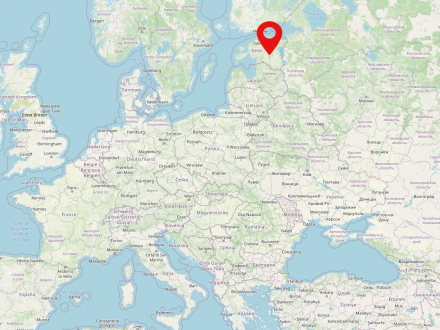
Estonia is a country in north-eastern Europe. It is inhabited by around 1.3 million people and borders Latvia, Russia and the Baltic Sea. The most populous city and capital is Tallinn.
Today's Estonian state only regained its political independence in 1991 as a result of the so-called “Singing Revolution” in the Baltic states and in the wake of the collapse of the Soviet Union. Estonian independence was first proclaimed in 1918 and achieved through the “Estonian War of Independence” (1918-1920). As early as 1940, this first Estonian state was replaced by the “Estonian Soviet Socialist Republic”, which was founded under Soviet occupation. With an interruption due to the German occupation during the Second World War (1941-1944) and with slightly different borders, it was a constituent republic of the Soviet Union until 1991. Before 1918, the territory of present-day Estonia was part of the Russian Empire, with its northern part forming the Baltic Governorate of Estonia and its southern part the northern half of the Baltic Governorate of Livonia. In the High and Late Middle Ages and at the beginning of the early modern period, parts of today's country were also under Swedish, Danish and Polish rule, while the Livonian part was also under the sovereignty of the Teutonic Order until 1561.
Estonia has been part of the European Union and NATO since 2004.
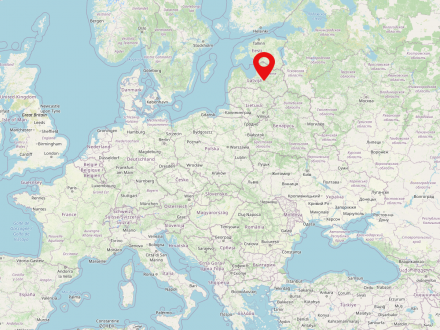
Latvia is a Baltic state in the north-east of Europe and is home to about 1.9 million inhabitants. The capital of the country is Riga. The state borders in the west on the Baltic Sea and on the states of Lithuania, Estonia, Russia and Belarus. Latvia has been a member of the EU since 01.05.2004 and only became independent in the 19th century.
Baltic Historiography from a Postcolonial Perspective
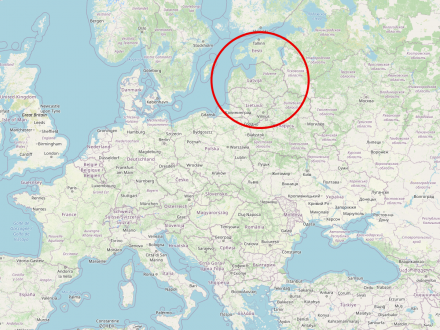
The Baltic States is a region in the north-east of Europe and is composed of the three states Estonia, Latvia and Lithuania. The Baltic States are inhabited by almost 6 million people.
To find a land where honey could be obtained in exchange for items of trifling value was, at a time when our ancestors knew neither sugar, tea, nor coffee […], a discovery worth more than Martinique, Santo Domingo, and Jamaica with all their coffee trees and sugar plantations.
Findeisen, Friedrich Gotthilf 1787. Lesebuch für Ehst- und Livland. Vol. I. Oberpahlen: Grenzius u. Kupzau, p. 14.
Among the defining features of a colonial relationship, Jürgen Osterhammel emphasizes the cultural differences between the colonizers and the colonized, the colonizers’ perception of the colonized as foreign and inferior, and ideological doctrines of justification rooted in a sense of mission (such as contributing to a divine plan of salvation, converting pagans, or civilizing savages), all of which rest on a conviction of their own cultural superiority.5
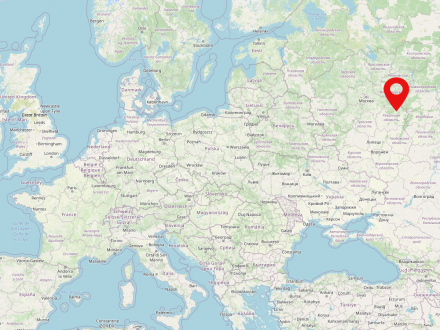
The Soviet Union (SU or USSR) was a state in Eastern Europe, Central and Northern Asia that existed from 1922 to 1991. It emerged from the so-called Soviet Russia, the successor state of the Russian Empire. The Russian Soviet Republic formed the core of the union and at the same time its largest part, with further constituent republics added. Their number varied over time and was related to the occupation of other countries (Estonia, Latvia, Lithuania), Soviet republics that existed only for a short time (Karelo-Finlandia) or the division or merger of Soviet republics. In addition, there were numerous autonomous republics or other territorial units with an autonomy status that was essentially limited to linguistic autonomy for minorities.
Before its formal dissolution, the USSR consisted of 15 Soviet republics with a population of approximately 290 million people. At around 22.4 million km², it was the largest territorial state in the world at the time. The Soviet Union was a socialist soviet republic with a one-party system and an absence of separation of powers.
“Who does the land belong to?”
Go, Ylo, to the shadows of your pagan ancestors! You have fought in vain. /---/ Ever more throngs of German Christians are arriving; they fill the churches, occupy the castles, and the land belongs to them.
Girgensohn, Lotta 1901. Ylo, Kaupos Sohn, und Hans von Tiesenhausen. Erzählung aus der Zeit der Gründung Rigas. Riga: Jonck&Poliewsky, pp. 166–167.
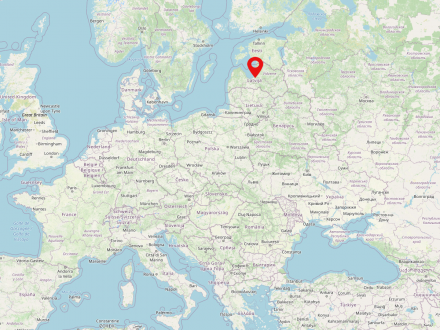
Riga is the capital of Latvia (population 2025: 588,911) and by far the largest city in the country. It is located in the southwest of the historical landscape of Livonia near the mouth of the Daugava River in the Gulf of Riga. Riga was an important trading and Hanseatic city with a multi-ethnic, but largely German-speaking population for centuries, whose political supremacy changed repeatedly. Until the end of the Middle Ages, it was mainly spiritual rulers (Archbishopric of Riga, Teutonic Order) who claimed the city and surrounding area for themselves, but after a brief period of Polish-Lithuanian rule, the city came under Swedish control in 1621. A century later, Riga became part of the Russian Empire and the capital of the Baltic governorate of Livonia.
In 1918, Riga became the capital of an independent Latvian state. After the German occupation during the Second World War in 1941, the Jewish population of Riga (8% of the total population) was mainly imprisoned in the ghetto, where numerous Jewish people from the territory of the German Reich at the time were also deported. In the same year, the Wehrmacht organized mass shootings of the Jewish population in the area of today's city. After the Second World War, the ethnic structure of Riga changed - the Jewish, German and Polish populations disappeared and were replaced by Russian, Belarusian and Ukrainian populations. The Latvian population lost its majority in the city and fell to almost a third by the time the Soviet Union collapsed. They now make up 47% of the total population.

The History of the Struggle for Freedom
Mankind shudders at the blood that was shed here in long and savage wars, until the ancient Prussians were almost entirely exterminated, while the Curonians and Latvians were reduced to a state of servitude beneath whose yoke they still languish today
Herder, Johann Gottfried 1792. Ideen zur Philosophie der Geschichte der Menschheit. Vol. 3. Riga, Leipzig: Hartknoch, p. 25.
Iron monsters rose from the sea. To us they seemed strange guests. Like a poisonous mist that corrupts and kills all things, they settled over the land. Through shameful deceit they beguiled us and stole into our castles and villages. [L]ike beasts of prey bursting from their lairs, they now rush forth, overthrow our altars, seize the fruits of our fields, violate our wives and daughters, and drag our children across the sea. […] As fire, sprung from a tiny spark, grows into a flickering flame […] until a blazing inferno surges through the forest and the last oak of the woodland stands scorched and dead—a pitiful sight—so the sword of the foreigners ravages all before it, stripping the vanquished of their dignity and turning them to slaves.
Merkel, Garlieb 1802. Wannem Ymanta, eine lettische Sage. Leipzig: Hartknoch, pp. 25–27.


Info section
Authors
