


Kaliningrad (Bevölkerungszahl 2024: 488.690) ist die einzige Großstadt in der russischen Exklave Oblast Kaliningrad, die ungefähr dem nördlichen Teil der preußischen Provinz Ostpreußen vor 1945 entspricht. Königsberg war nicht nur die Hauptstadt der Provinz und die nordöstlichste Großstadt Preußens, sondern ab 1724 auch Königliche Haupt- und Residenzstadt in Preußen. Heute ist Kaliningrad ein wichtiger Hafen- und Industriestandort sowie ein bedeutender Ort für Kultur und Wissenschaft.

The Province of West Prussia was a Prussian administrative unit from 1773 to 1829 and from 1878 to 1919. It was established following the First Partition of Poland (1772), primarily within the territory of the Royal Prussian share (Polish Prussia), although some territories were only incorporated after the annexation during the Second Partition (1793). In 1824, West Prussia was incorporated into the Province of Prussia, but was separated again in 1878. From 1793 onward, Danzig served as the provincial capital. While the German-speaking population dominated in the cities, Polish and Kashubian were the predominant languages in rural areas. In 1919, only a small area in the east remained part of the German Empire, which was incorporated into the province of East Prussia; the vast majority, however, became part of the restored Polish state. Today, the territories of the former Prussian province belong to the Polish Pomeranian Voivodeship.

Działdowo is a county town (population 2022: 20,367) in the Warmian-Masurian Voivodeship in north-eastern Poland.
Soldau was established in the course of the colonization of the region of Sassen, where the Teutonic Order built a castle near the border with Mazovia in the 14th century. In 1344, the nearby village of Soldav was granted town rights. In 1466, the town found itself in Polish fiefdom territory. Działdowo became a county town in 1525. In Prussia, it lost its district function, which it only regained after being reincorporated into the Polish state in 1920. During the German occupation from 1939 to 1945, the Soldau concentration camp was established here.
Today, the town is an important transportation hub and a regional cultural center.
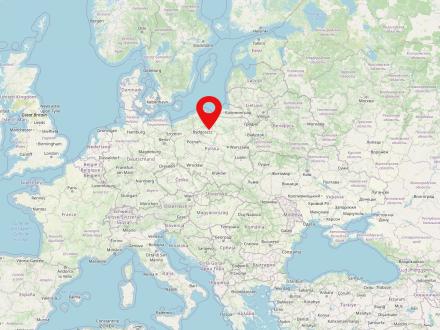
Located in the Polish voivodeship of Kujawsko-Pomorskie about 100 km south of Gdańsk (Gdansk), the city of Grudziądz, German Graudenz, today has about 96,000 inhabitants. The history of the city, located on the Vistula River, dates back to the 10th century AD. In 1231 the Teutonic Order built a castle with a commandery here, and in 1291 the town was granted city rights. As part of the Kulm Land, Graudenz was subordinated to the Polish Crown in 1466, and in the course of the first partition of Poland-Lithuania in 1772, the town became part of the Kingdom of Prussia. Since the First World War the town has belonged to Poland, interrupted only by the German occupation between 1939 and 1945.

Toruń (population 2024: 193,717) is a Polish university city and the seat of the parliament of the Kuyavian–Pomeranian Voivodeship. The city is situated in the historical landscape of Kulmerland. Founded in the High Middle Ages under the Teutonic Order, the city joined the Hanseatic League in the 14th century. In the 15th century the city, like the rest of Kulmerland, Pomerelia or Warmia, fell to the Kingdom of Poland. In the course of the first partition of Poland-Lithuania in 1772, Toruń became part of Brandenburg-Prussia and was part of the Prussian province of West Prussia until the 20th century. Nicolaus Copernicus (1473-1543) was born here.

Samogitia is a historical region in present-day western Lithuania. Originally settled by Baltic tribes, the region became the scene of raids by the Order of the Brothers of the Sword and then of conflicts between the Teutonic Order and the Grand Duchy of Lithuania since the 13th century. After the military defeats of the Teutonic Order at the beginning of the 15th century, it ceded the region to the Grand Duchy of Lithuania. It remained as such until the partitions of Poland-Lithuania at the end of the 18th century. It was then divided between Russia and Prussia, and from 1815 Samogitia belonged entirely to Russia.
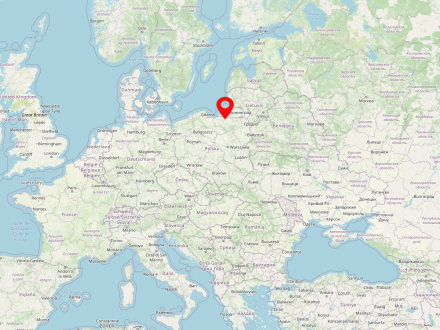
East Prussia was the north-easternmost province of Prussia and at times one of the largest provinces of the Prussian state. The province goes back to the Duchy of Prussia, which was elevated to a kingdom in 1701. It emerged from the Teutonic Order in 1525, was initially a Polish fiefdom and only came under Brandenburg sovereignty in 1618. The territory was not formally given the name East Prussia until the 1770s, following the annexation of previously Polish territories as “West Prussia” as part of the first partition of Poland-Lithuania in 1772. In 1824, the two provinces were even merged to form a single province of Prussia, but separated again in 1878. The capital of the duchy and province was Königsberg until the end.
The Prussia Society of Antiquities was founded on September 14, 1844, during the 300th anniversary celebrations of the University of Königsberg. It was the oldest historical society in East Prussia and a society with legal status dating from before the German Civil Code (BGB). Its aim was to preserve the history of the province for future generations “in words, images, monuments, and remains from bygone ages.” During its first four decades, the main focus was on prehistoric and early historic archaeology; from 1888 onwards, however, the history of the State of the Teutonic Order and the study of the more recent history of East and West Prussia came increasingly to the fore.
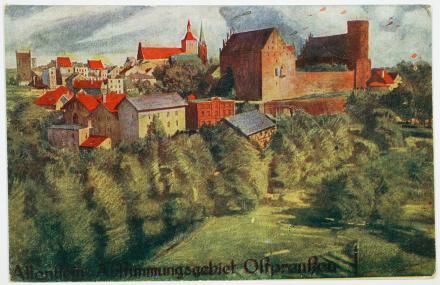
The city of Olsztyn (population 2022: 168,212) was founded in 1353 as Allensteyn on the Łyna river. Olsztyn is the largest city in Warmia and the capital of the Warmian–Masurian Voivodeship. The city is member of the European Route of Brick Gothic, especially because of its Old Town market sqare and the Castle of Warmian Cathedral Chapter.
The picture shows a city view of Olsztyn /Allenstein on a postcard from before 1945.
