

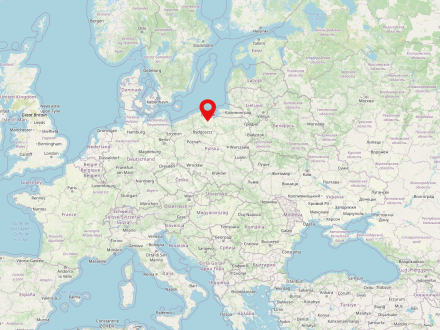
West Prussia is a historical region in present-day northern Poland. The region fell to Prussia as a result of the first partition of Poland-Lithuania in 1772 and received its name from the province of the same name formed by Frederick II in 1775, which also included parts of the historical landscapes of Greater Poland, Pomerania, Pomesania and Kulmerland. The Prussian province lasted in changing borders until the early 20th century. After World War I, parts fell to the Second Polish Republic, founded in 1918. The largest cities in West Prussia include Gdansk (Polish: Gdańsk, today Pomeranian Voivodeship), Elbląg (Polish: Elbląg, today Warmia-Masuria Voivodeship), and Thorn (Polish: Toruń, today Kujawsko-Pomeranian Voivodeship).

Krokowa (German: Krockow) is a village in northern Poland populated by about 710 inhabitants. The village is located in Puck County, north of Gdańsk.
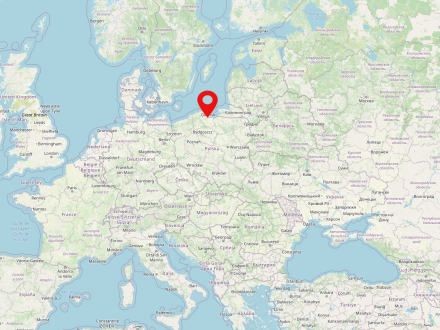
Gdańsk (population in 2025: 489,328) is the largest port city in Poland and also the capital of the Pomerania Voivodeship on the Baltic Sea coast. Thanks to its favorable location at the mouth of the Vistula River, this originally Pomeranian settlement became an important trading port as early as the 10th century. In 997, Poland conquered the region, which later belonged by turns to the Duchy of Pomerelia, Brandenburg, the Teutonic Order, Prussia, the Free City of Gdańsk, and the German Empire. In 1263, Gdańsk was granted Lübeck city rights. Due to the city’s economic and military significance and its self-assured citizenry, it was able to negotiate various privileges. However, this also led to sometimes military conflicts with the ruling powers. The railway connection, established in 1850, counteracted the onset of decline following several wars and natural disasters in the 19th century. After World War II (1939–1945), the city was heavily damaged, but the historic buildings of the Old Town were rebuilt. 1945-1989, Gdańsk was often at the center of resistance against the repressive government of the People’s Republic of Poland.
The museum is sponsored by the Federal Republic of Germany, the state of North Rhine-Westphalia, the Landschaftsverband Westfalen-Lippe and the city of Warendorf. The sponsor is the Cultural Foundation of West Prussia.


